Katie Couric Overcomes Loss to Promote Colon Cancer Awareness
Colon cancer took the life of CBS Evening News anchor Katie Couric's husband.
Ever since that loss, she has become one of the most influential figures in the battle against colon cancer.
After the death of her husband to colorectal cancer in 1998, she began a national campaign to raise public awareness about this preventable disease, which is responsible for 665,000 deaths worldwide each year.
A lot of it can be prevented with the right knowledge.
And the survival rate is going up each year, so there is a lot of hope.
Her Story, Her Campaign, Her Success
Couric was the successful and popular co-host of NBC’s Today show when her husband, attorney and NBC legal analyst, Jay Monahan, died from colorectal cancer at age 42.
According to Couric, her husband had no symptoms when he was diagnosed with the disease a year before his death. She also confirmed there was no history of colorectal cancer in his family.
In 2000, Couric went public with her campaign to prevent colon cancer by having an on-air colonoscopy. The screening procedure was part of her much-publicized Today show exclusive on the disease.
The televised special was a tremendous success. In the year that followed, the number of colonoscopy screenings in the U.S. increased by 20%. Researchers from the University of Michigan called this result “The Katie Couric Effect.”
Couric continued to advocate for the prevention and treatment of colon cancer. In 2004, she hosted the two-week long series “Confronting Colon Cancer” on the Today show.
The 5-part feature included information on the National Colorectal Cancer Research Alliance, an organization Couric co-founded with the Entertainment Industry Foundation.
“We want to educate people, prompt them to take action by talking with their doctors about screening, and raise desperately needed research dollars so cutting-edge scientists can work on prevention strategies, screening techniques, and better treatment options,” she wrote in an MSNBC article about her work with NCCRA.
Her efforts with the group also involved raising funds for the Jay Monahan Center for Gastrointestinal Health.
The center, named after her late husband, opened in 2004 as part of the New York-Presbyterian Hospital and the Weill Medical College of Cornell University. The facility specializes in the prevention and treatment of colorectal diseases as well as education, research and public outreach.
Katie Couric's Advice on Colon Cancer
Couric emphasizes the importance of talking to your doctor about your risks for colon cancer and what you can do to help prevent the disease. In addition, she strongly recommends getting regular colonoscopy screenings, especially when you reach 40.
For those under 40, Couric and NCCRA recommend getting screened if you have the following:
- A family history of colon cancer or colon polyps
- A personal history of colon cancer or colon polyps
- A personal history of Crohn's disease or ulcerative colitis
- A personal history of uterine or ovarian cancer
The group also supports changing certain activity that can increase your risk of colon cancer. High-risk patterns that can contribute to the disease are:
- A lack of exercise
- Obesity
- A diet high in red meat and animal fats
- A diet low in fruits and vegetables
- High rate of alcohol use
- Use of tobacco
In particular, Couric encourages women to consider their risks for colon cancer and to get regular colonoscopy screenings.
According to a 2004 survey conducted for NCCRA, women are not as concerned about the disease as they should be and significantly underrate their risk for developing this common cancer.
Return from Katie Couric Colon Cancer to Colon Cancer
Return from Katie Couric Colon Cancer to Colon Health Homepage


Recommended
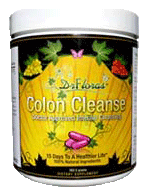
I recommend the DrFloras colon cleanser if you want to cleanse your colon safely, effectively, and without spending a fortune.
Related Articles