Learn How Different Types of Colon Polyps Affect Your Health
There are many types of colon polyps, and some of them can turn cancerous, but let us start with what a polyp is.
A polyp is basically an extra tissue that tends to grow inside the body.
A colon polyp grows in the colon or the large intestine.
The large intestine is a vital part of our digestive system and plays a major role in facilitating the process of digestion and excretion.
There are various types of colon polyps and each has its own characteristics.
The colon is long and hollow, like a tube! A few of its functions are absorbing water, minerals and salts from our food. The waste matter is then stored down the line until we visit the toilet.
Polyps are usually not fatal as they happen to be benign tumors. Sometimes, polyps can grow in size and might turn cancerous. They are caused due to an abnormal growth of cells.
Our healthy cells tend to grow as well as divide in a normal manner, it's a process which is controlled by the two wide groups of genes. Mutation in these genes can lead to continuous cell division, even when it is not required.
To be on the safe side, polyps can be removed when detected.
Polyps can form anywhere in the colon or large intestine. They can be big, small or even flat, like a mushroom.
The small and mushroom shaped polyps are usually less likely to be malignant or cancerous, while the larger ones are more likely to develop into colon cancer.
Generally speaking, the larger the polyp, the greater the chance that it is dangerous.
Here are three major classifications of polyps:
- Adenomatous Polyps
Also known as 'adenomas', they are divided into 3 subtypes and this is because of their microscopis characteristics - villious, tubular and lastly tubulovillious. Villious adenomas are usually the largest of the three and therefore are more likely to be malignant.
The different shapes of polyps are called sessile or pedunculated. The sessile polyps have a broader base and the pedunculated grow on fleshy stalks and look quite similar to a mushroom.
- Hyperplastic Polyps
This type of polyp is mostly seen in the descending or the left colon and the rectum. Hyperplastic polyps are usually less than ¼ inch in diameter. The term "Hyperplastic" means an increase in the cells. These polyps are usually less likely to be malignant.
- Inflammatory Polyps
These are formed in the colon due to prolonged ulcerative colitis. However, they are not cancerous, although ulcerative colitis can raise the chances of developing cancer.
That's all I've got for you. Remember if you think you have any trouble whatsoever to see your healthcare physician.
Recommended
One of the best ways to keep your body clean, healthy, and functioning properly is to do a colon cleanse.
 Colon cleanses can be done by just eating a strict healthy diet, or going on a juice fast.
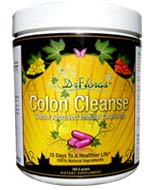
You can also buy a professionally formulated herbal colon cleanse, which has been formulated to effectively and safely eliminate constipation, toxins, and clean your body..
I've done a lot of research on the best colon cleansers, and I have to say, there are a lot of bad ones out there. The one I think is best - and that I recommend - is DrFloras colon cleanse.
They even offer a long money-back guarantee in case it doesn't work for you.
I'm very careful with what I recommend. I only recommend products that are 100% natural, safe, and effective, which is why I really like DrFloras.
Stay safe!


Recommended
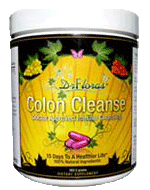
I recommend the DrFloras colon cleanser if you want to cleanse your colon safely, effectively, and without spending a fortune.
Related Articles